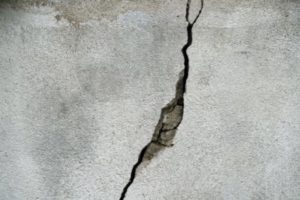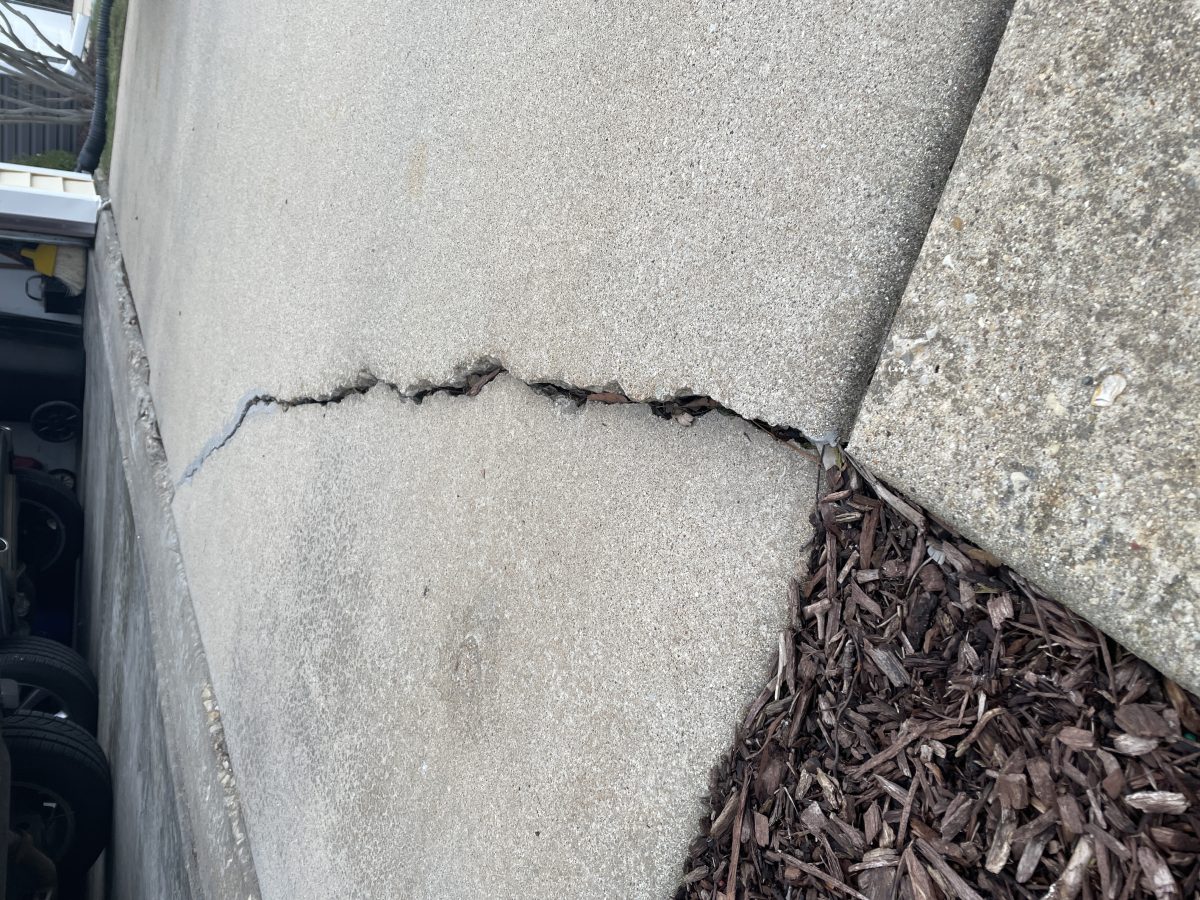
Concrete is many things. It’s hard, usually gray and heavy. Very, very heavy. So it is no surprise that if the soil beneath a concrete slab isn’t properly compacted or has been weakened, it will start to sink. When that happens, concrete leveling can return the slab to its original position and prevent the stress from causing more cracking.
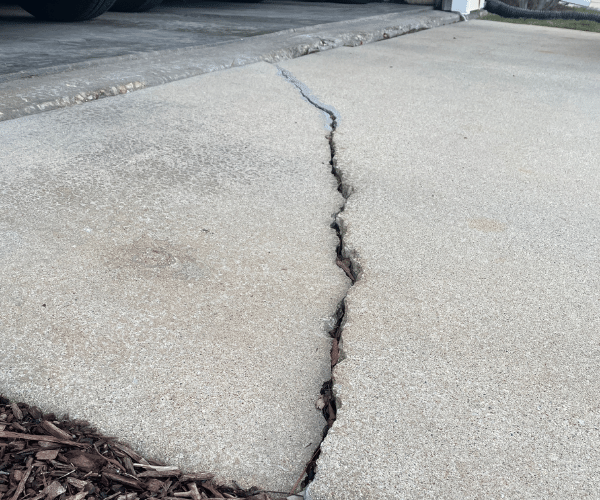
Why Settlement Causes Concrete to Crack
You might be wondering why concrete sinking a bit is so bad for it. Sure, it might make transitions, say from the driveway to the garage, uneven, but otherwise, what’s the big deal.
That might be the case, if the concrete settled evenly. But soil composition and strength isn’t uniform, even in an area as small as a patio slab. Instead, portions will begin to settle while others are still being properly supported.
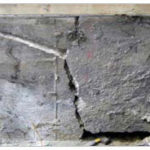
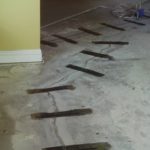
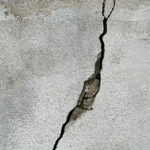
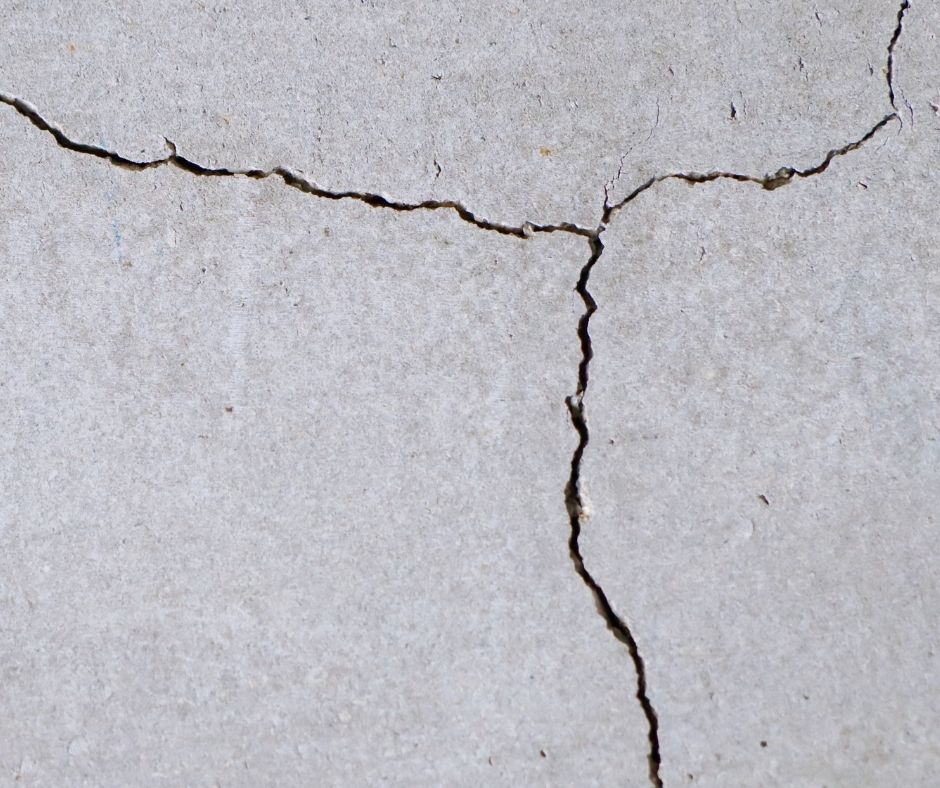
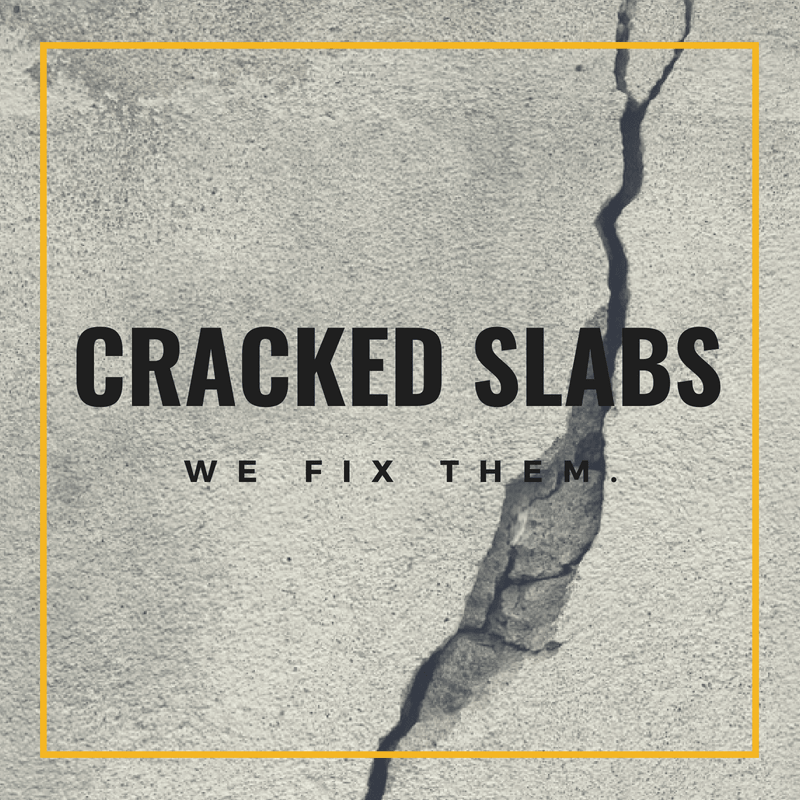
Say you are holding up a piece of paper with two hands underneath but drop one of the hands a couple of inches below the other. What will happen? The paper will begin to bend at the point where the higher hand stops supporting it. However, since concrete is not as flexible as paper, something has to give. That “give” comes in the form of cracks.
What Surfaces Can Concrete Leveling Be Used On?
The easy answer to this is a question: is it a concrete slab? If so, it can probably be repaired using concrete leveling. Any slab up to and including airport runways have been leveled using this method.
For residential jobs, however, the most common uses include:
- Driveways
- Sidewalks
- Patios
- Pool Decks
- Walkways
- Air Conditioner Pads
- Garage Slabs
- Porches
What Concrete Leveling Methods are Available?
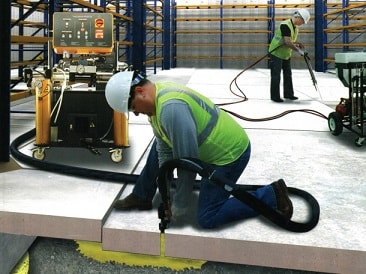
While there are some cases that might call for an under-slab piering system, for most residential work, it comes down to two options: mudjacking and polyjacking (also known as polyurethane foam lifting).
Both work on the same principal and same general procedure. A technician identifies where the slab needs to be lifted. A hole is then drilled in the slab at this point. The lifting material is injected through this hole and lifts the slab from below. The holes are then patched and once the material cures, the slab is ready to be used.
Here are the differences:
The Materials
Mudjacking: A concrete slurry.
Polyjacking: An expanding polyurethane foam.
Why this matters: Two main reasons (beyond ones we will cover later). First, the mudjacking slurry is much heavier, further weighing down the soil. Second, the polyurethane foam used in polyjacking is chemically inert and will not break down in the presence of water or any of the chemicals in the soil. That makes it a more long-lasting solution than mudjacking, which can break down over time.
The Injection Hole
As you might guess, the hole required for injecting a concrete slurry is larger than the one needed to inject the two part liquid mixture that turns into the expanding foam underground. Polyjacking only requires dime-sized holes. This makes them easier to patch as well as less destructive to the already cracked slab.
The Curing Time
Because most mudjacking mud is cement-based, it will take considerable time to fully harden underground. That is time that the slab cannot be used. In some cases, that might not be a big deal, but it can be for a garage or driveway slab. For polyjacking, the curing time is about 15 minutes. By the time your contractor has the site cleaned up and is ready to leave, you should be ready to use your slab.
Why Concrete Lifting Is Often a Better Solution than Slab Replacement
- Cost: This is the main one for many people. Replacing an entire concrete slab is a labor-intensive process that involves both removing the old slab and pouring the entire new one. Between the labor and materials cost, it is not a cheap endeavor. Concrete leveling is generally the less expensive option.
- Convenience: Concrete lifting jobs can often be done in a day, and with the curing time for the foam, your driveway or patio or pool deck won’t even be out of commission overnight. The same can’t be said for concrete replacement, where the tear out and slab reconstruction are much more time consuming even before taking into account the fact that the concrete then needs to dry.
One Time Concrete Leveling Can’t Be Used
Basically, it is important to use leveling before the slab is too damaged. If the concrete is too degraded, the only option left might be replacement. The key is attacking the problem early on, before it gets to that point.
Are You Interesting in Concrete Leveling? If You Live in Southern California, Give Us a Call
At Foundations on the Level, we offer concrete leveling services in San Diego and Orange counties. If you are interested in learning more about our services, contact us today.
 California has been no stranger to weird weather and other natural occurrences this last year. After wildfires have removed most of the plant life protecting the earth from erosion, record-breaking rainfalls have been taking place. Landslides and other disasters have occurred throughout the state.
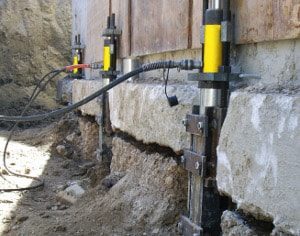 Any type of movement of the earth around your home can damage the foundation. A
 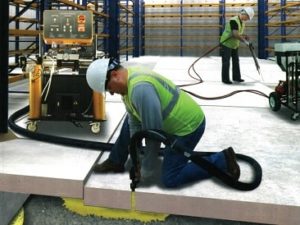 Not every landslide causes foundation problems, sometimes it may just disturb your concrete slabs. Your driveway, sidewalk, or patio can be pushed out of place or sink.
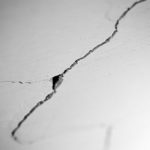
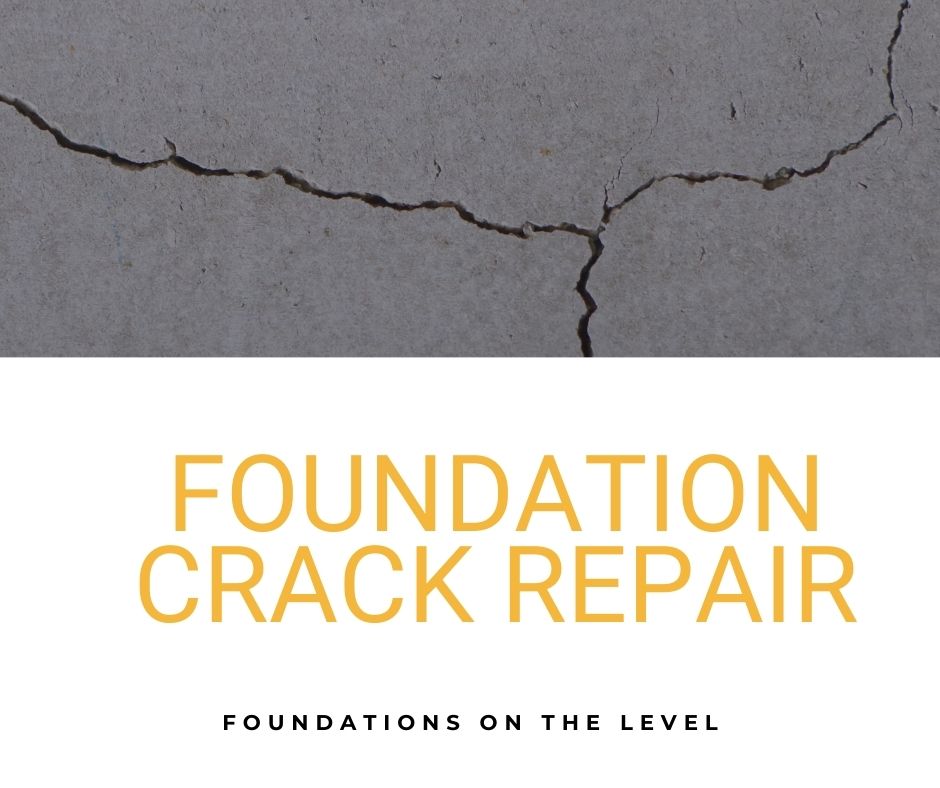
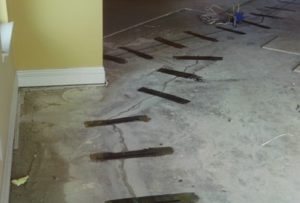 If the earth around your home moves, you may notice cracks in floors, walls, and ceilings. There are two kinds of cracks: structural and settlement cracks. You can look for cracks and monitor if they are growing. If you are at all concerned about a crack, you must contact a reputable foundation contractor like FOUNDATIONS ON THE LEVEL.
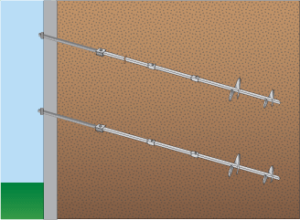 Your retaining wall has one job: to keep the earth on the other side of the wall in place. If a landslide occurs, it can cause the