A Complete Guide to Concrete Leveling

Concrete is many things. It’s hard, usually gray and heavy. Very, very heavy. So it is no surprise that if the soil beneath a concrete slab isn’t properly compacted or has been weakened, it will start to sink. When that happens, concrete leveling can return the slab to its original position and prevent the stress from causing more cracking.
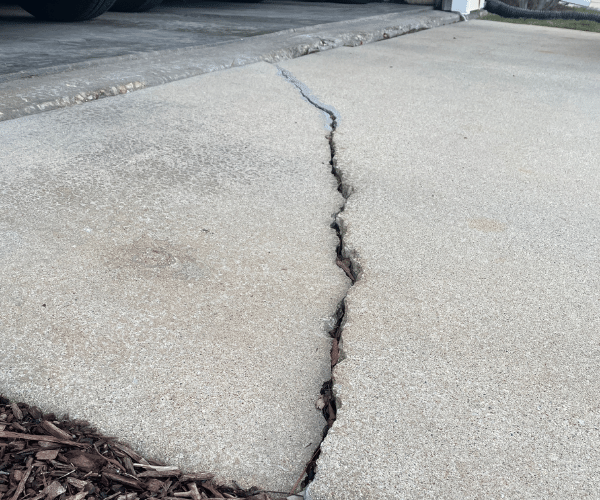
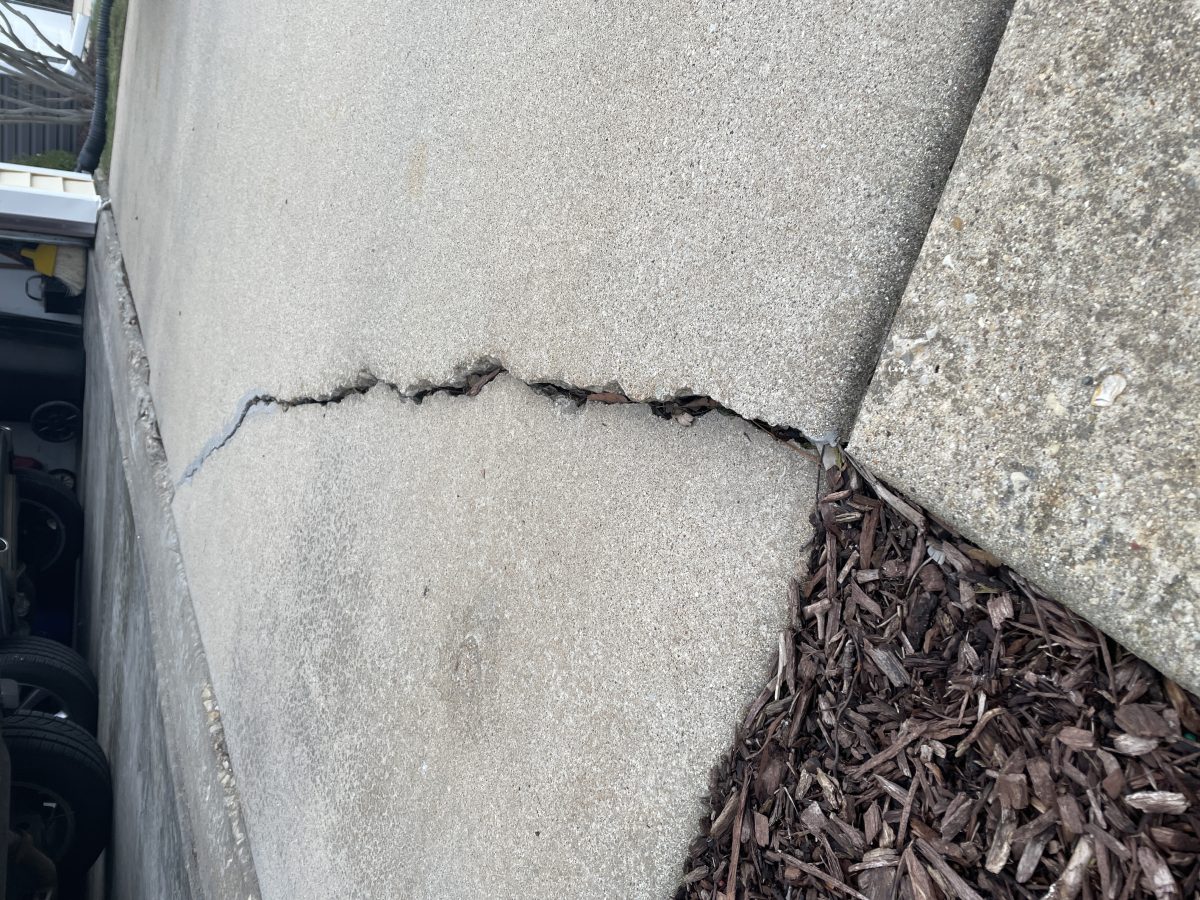
Fixing a cracked driveway

Why Settlement Causes Concrete to Crack

You might be wondering why concrete sinking a bit is so bad for it. Sure, it might make transitions, say from the driveway to the garage, uneven, but otherwise, what’s the big deal.

That might be the case, if the concrete settled evenly. But soil composition and strength isn’t uniform, even in an area as small as a patio slab. Instead, portions will begin to settle while others are still being properly supported.

Say you are holding up a piece of paper with two hands underneath but drop one of the hands a couple of inches below the other. What will happen? The paper will begin to bend at the point where the higher hand stops supporting it. However, since concrete is not as flexible as paper, something has to give. That “give” comes in the form of cracks.

What Surfaces Can Concrete Leveling Be Used On?

The easy answer to this is a question: is it a concrete slab? If so, it can probably be repaired using concrete leveling. Any slab up to and including airport runways have been leveled using this method.

For residential jobs, however, the most common uses include:

  • Driveways
  • Sidewalks
  • Patios
  • Pool Decks
  • Walkways
  • Air Conditioner Pads
  • Garage Slabs
  • Porches

What Concrete Leveling Methods are Available?
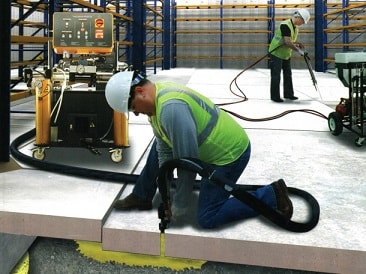
slab leveling

While there are some cases that might call for an under-slab piering system, for most residential work, it comes down to two options: mudjacking and polyjacking (also known as polyurethane foam lifting).

Both work on the same principal and same general procedure. A technician identifies where the slab needs to be lifted. A hole is then drilled in the slab at this point. The lifting material is injected through this hole and lifts the slab from below. The holes are then patched and once the material cures, the slab is ready to be used.

Here are the differences:

The Materials

Mudjacking: A concrete slurry.

Polyjacking: An expanding polyurethane foam.

Why this matters: Two main reasons (beyond ones we will cover later). First, the mudjacking slurry is much heavier, further weighing down the soil. Second, the polyurethane foam used in polyjacking is chemically inert and will not break down in the presence of water or any of the chemicals in the soil. That makes it a more long-lasting solution than mudjacking, which can break down over time.

The Injection Hole

As you might guess, the hole required for injecting a concrete slurry is larger than the one needed to inject the two part liquid mixture that turns into the expanding foam underground. Polyjacking only requires dime-sized holes. This makes them easier to patch as well as less destructive to the already cracked slab.

The Curing Time

Because most mudjacking mud is cement-based, it will take considerable time to fully harden underground. That is time that the slab cannot be used. In some cases, that might not be a big deal, but it can be for a garage or driveway slab. For polyjacking, the curing time is about 15 minutes. By the time your contractor has the site cleaned up and is ready to leave, you should be ready to use your slab.

Why Concrete Lifting Is Often a Better Solution than Slab Replacement

  1. Cost: This is the main one for many people. Replacing an entire concrete slab is a labor-intensive process that involves both removing the old slab and pouring the entire new one. Between the labor and materials cost, it is not a cheap endeavor. Concrete leveling is generally the less expensive option.
  2. Convenience: Concrete lifting jobs can often be done in a day, and with the curing time for the foam, your driveway or patio or pool deck won’t even be out of commission overnight. The same can’t be said for concrete replacement, where the tear out and slab reconstruction are much more time consuming even before taking into account the fact that the concrete then needs to dry.

One Time Concrete Leveling Can’t Be Used

Basically, it is important to use leveling before the slab is too damaged. If the concrete is too degraded, the only option left might be replacement. The key is attacking the problem early on, before it gets to that point.

Are You Interesting in Concrete Leveling? If You Live in Southern California, Give Us a Call

At Foundations on the Level, we offer concrete leveling services in San Diego and Orange counties. If you are interested in learning more about our services, contact us today.
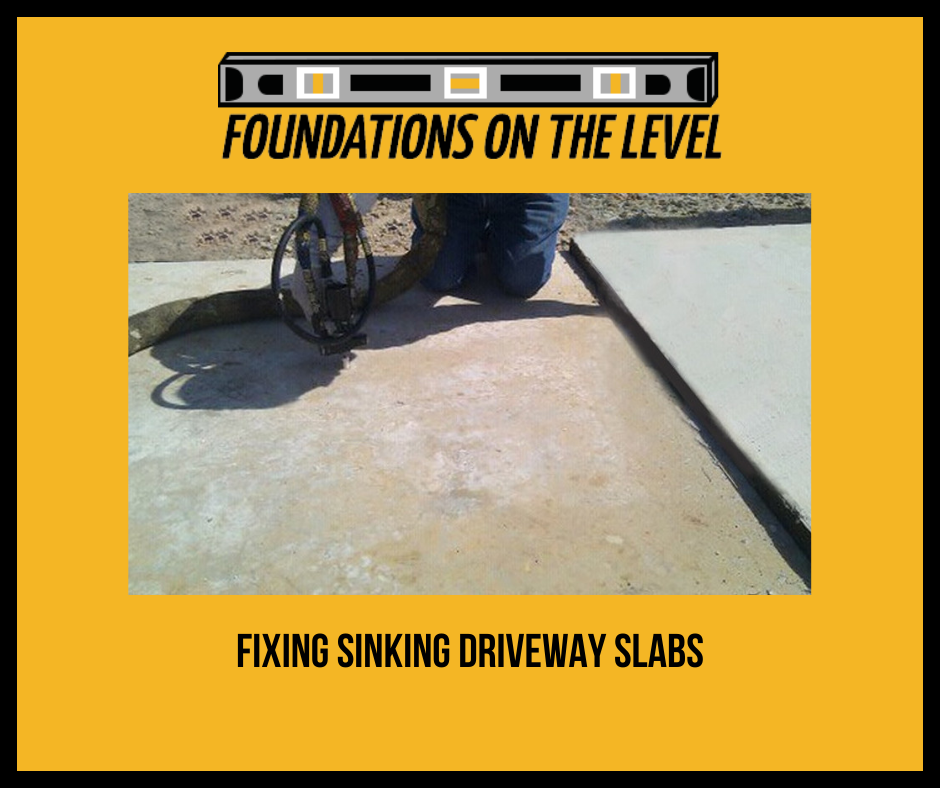
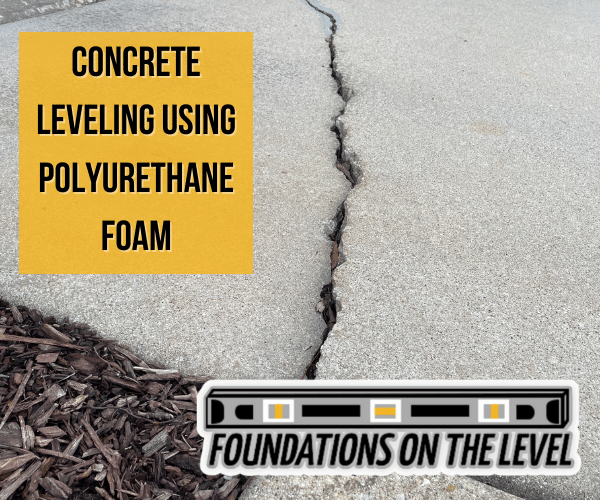
How to Fix a Cracked and Sinking Driveway

Wouldn’t it be wonderful if driveways perpetually flat and smooth, pristine surfaces on which to drive or walk or play? Unfortunately that is not reality. Many will eventually be faced with a cracked and sinking driveway.

And while driveways will inevitably, in time, require replacement, your goal should be to avoid that solution as long as possible. It is invasive. It is time-consuming. And it is very expensive.

Fixing a cracked driveway

The Problem With Sinking Driveway Slabs

When a driveway begins to sink and settle, the problems are twofold. The first are those that are the direct result of the sinking.

Ideally, your driveway slab should be basically level with the sidewalk and with the entrance to your garage. If your driveway slab begins to sink at one end, this is no longer the case. This can both pose a tripping hazard and increase the wear and tear on your tires.

Depending on how the driveway sinks, it also could affect drainage off of it. Ideally, your driveway won’t drain water toward your home. If it begins to sink in a way that it does, that can cause more significant problems for your home.

The second set of problems caused by a concrete slab sinking is the effect that it has on the concrete itself. If the entire slab sinks uniformly, your might have minimal issues in this regard. Unfortunately that is rarely the case. If the soil underneath supports some areas of the driveway better than others, it is going to place the slab under stress. Eventually, that stress will likely cause cracking. The longer the slab is under that stress, the worse the cracking issues are likely to get.

A Better Way to Repair a Cracked & Sinking Driveway

Unless the concrete is too far gone to be saved, a better option than tearing it all out and starting from scratch is to lift the sunken concrete back to its original level.

This will not magically fix the cracks. It will, however, remove the tripping hazards that cracks with elevation changes bring. It will also remove the stress on the concrete that can lead to more cracking by properly supporting the slab from below.

How Polyjacking Works

At Foundations on the Level, we use polyurethane foam concrete leveling, also known as polyjacking. After determining where the concrete needs to be lifted, we will drill one or more small holes roughly the size of a dime through the concrete slab. An expanding polyurethane foam solution is then injected through the hole into the soil underneath the slab.

The solution flows into the weak spots in the soil and then starts to expand, hydraulically lifting the concrete upward as it does so. By closely monitoring the process, we can precisely level your driveway slab.

Why Polyjacking Over Mudjacking?

Polyjacking holds several key advantages over the old concrete lifting standby of mudjacking.

  1. Smaller holes: While the size of mudjacking holes vary, they are often at least twice as large as those made for polyjacking. That makes the mudjacking holes more difficult to repair in a way that both doesn’t cause harm to the slab and doesn’t stick out like a sore thumb on the driveway.
  2. Faster cure time: With mudjacking, you usually can’t use your driveway for 24 hours after it is completed. With polyjacking, that time is 15 minutes.
  3. Water resistant: The polyurethane foam doesn’t break down in the presence of water or the chemicals found in soil. This makes it basically erosion-proof. The same can’t be said of cement slurry used in mudjacking, which can break down over time.
  4. Light-weight: The mudjacking slurry is heavy, which can further weigh down the soil. Polyurethane foam, on the other hand, is much lighter, removing that potential problem.

Need to Level Your Driveway in San Diego or Orange County? Give Foundations on the Level a Call

If you live in Southern California and your driveway is sinking and you want more information on what concrete leveling entails, contact us today at Foundations on the Level.

Why Is My Driveway or Sidewalk Sinking?

You’ve noticed that portions of your sidewalk or driveway (or porch, or pool deck, or any other concrete slab around your house) has started to sink. The slab is cracking, and the elevation change on either side of the crack is posing a tripping hazard. But why is your slab sinking?

Fixing a cracked driveway

The root of the problem likely lies in the soil beneath it, including when the root of the problem is literally a root.

Causes of Sinking Concrete Slabs

Soil Not Properly Compacted

Concrete is heavy. If the soil beneath the sinking slab isn’t properly compacted, it won’t be strong enough to support the weight of the concrete without the slab sinking.

Erosion

Erosion can create voids under concrete slabs. Those voids then act as weak points, with those portions of the slab sinking. This differential settlement causes cracking and tripping hazards.

Shrink-Swell Cycle

Some soils, especially clay, have significant shrink/swell cycles. Depending on the condition of the soil when the concrete was laid, the soil shrinking as it dries could lead to settlement or the soil expanding when it is wet could lead to heaving.

Tree Roots

As trees grow, the roots grow, and sometimes grow under concrete slabs. During the growing stage, the roots are more likely to cause heaving than settlement or sinking. Mature trees, depending upon soil type, can draw enough water in through their roots to dry out the surrounding soil. The shrinkage from this can cause settlement in some cases. If a tree dies or it cut down, the decomposing roots can create voids or patches of poorly compacted soil, causing the slab to sink.

slab leveling

How We Repair Sinking Slabs

If the sinking slab is caused by poorly compacted soil or voids beneath the slab, we have the solution: concrete lifting with polyurethane foam. We pump the expanding foam beneath the slab. As it expands, the foam fills any subsurface voids and compacts the surrounding soil from within. It then hydraulically lifts the slab back to level from underneath.

Read more about concrete leveling.

Contact Us To Learn More About Our Concrete Leveling Services in Southern California

Foundations on the Level proudly serves San Diego and Orange counties in California. If you live within our service area and would like to learn more about how we can lift your sunken concrete slab, contact us today.

Concrete Leveling Using Polyurethane Foam

Permanently Level and Stabilize Your Concrete This Spring

Springtime is often the time of year that homeowners look to complete home improvements and repairs. As you inspect your home, have you noticed uneven or sinking concrete slabs? Or an increased number of cracks? Foundations on the Level offers a solution to concrete leveling using polyurethane foam. The great news is that using polyurethane foam may permanently level and stabilize your concrete slabs!

An example of a concrete driveway that would benefit from polyurethane concrete leveling.
Example of cracked and sunken concrete

Best in the Industry for Concrete Leveling

In today’s industry, one of the leading solutions for concrete leveling and repair is polymer foam. At Foundations on the Level, we use Accella Polyurethane Systems for their Low-Density Water Blown Spray Foam. This foam spray is developed to meet all slab raising needs while replacing existing blowing agents with zero ozone-depleting solvents. This makes the foam a highly desirable solution as a result due to its environmental friendliness. Accella has overcome a major industry problem by creating this highly stable water-blown spray foam

How Polyurethane Foam Works

In order to fix your slab and raise it back to its original position, Foundations on the Level will evaluate your slab to identify the areas that need the polymer foam applied. Your concrete leveling professional will drill a small hole in the concrete in that area and inject the polymer foam, causing the concrete to rise to its original level. To see this process in action, watch this video.

This Spring, Consider Concrete Leveling With Polyurethane Foam

Foundations on the Level has the knowledge and tools to fix your slab and raise it back to its original position. We offer a free inspection and report for property owners so you can be confident in our expertise. The investment you have in your home or business with our concrete slab repair services. If you are interested in concrete leveling using polyurethane foam, call us today at 760-889-8150